
When a loved one passes away at home, it can be difficult to know what to do first. Even when the passing is expected, family members may suddenly find themselves wondering whom to call, what documents are needed and when funeral arrangements can begin.
At this moment, you don’t need to organise everything at once. The first priority is simply to have the death properly certified. From there, the remaining arrangements can be handled one step at a time.
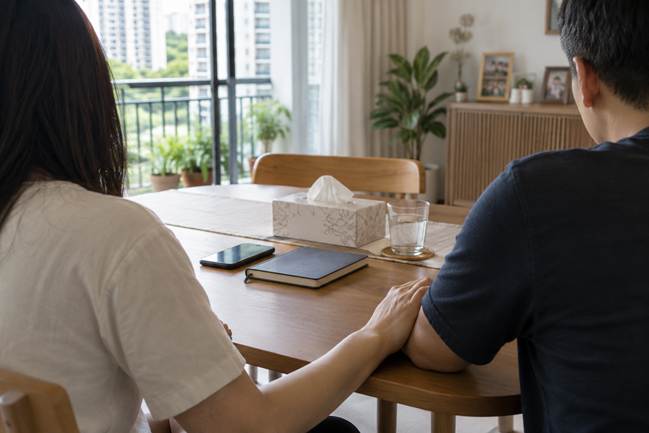
1. Contact a Doctor
If the death occurs at home, a doctor will first need to confirm the cause of death.
If the deceased had been receiving treatment for an existing medical condition, the family can contact the doctor who had been caring for them. Alternatively, another doctor who provides house calls may be able to assist.
If the cause of death is known and due to natural causes, the doctor can certify the death electronically. Once this is done, the death will be automatically registered in Singapore.
2. What If the Cause of Death Is Unclear?
Sometimes, a doctor may not be able to certify the death.
This could happen if the cause is unknown, unexpected or requires further investigation. In such situations, the Police may need to be contacted and the case referred to the Coroner.
The deceased may then be transferred to the HSA Mortuary so that the cause of death can be determined. Depending on the circumstances, further examination may be required.
While this can sound worrying, it does not necessarily mean that something suspicious has occurred. It simply means more information is required before the cause of death can be confirmed.
3. Contact a Funeral Director
Once the appropriate procedures are underway, the family can contact a funeral director for guidance.
This is often when things start to become more manageable.
An experienced funeral team can assist with the collection and transportation of the deceased, body preparation where required, casket selection, wake arrangements and coordination of the eventual cremation or burial.
Families can also discuss practical matters such as the wake location, number of days, religious or cultural traditions, expected number of visitors and budget.
You don’t need to know exactly what you want before calling. A funeral advisor can explain the available choices and help the family make decisions one at a time.
4. Download the Digital Death Certificate
Once the doctor has certified the death electronically, the death is automatically registered.
The next-of-kin can then download the Digital Death Certificate through the Singapore Government’s MyLegacy@LifeSG website.
The doctor will provide the information required for the download, including the death document number. The Digital Death Certificate should be downloaded and saved within 30 days.
This document will be useful for funeral arrangements and various administrative matters that follow.
5. Prepare Some Basic Items
While the funeral arrangements are being coordinated, the family can prepare a few personal items.
This may include clothing for the deceased and a suitable photograph for the wake or memorial display.
There is no need to immediately sort through every document, photograph or possession belonging to your loved one. Many of these matters can wait until after the funeral.
6. Decide on the Funeral Arrangements
The family can then consider what kind of farewell would be most appropriate.
Would you prefer the wake to be held at a funeral parlour, HDB void deck, private residence or another suitable venue? How many days would allow relatives and friends enough time to pay their respects?
You may also need to consider cremation or burial, religious or cultural traditions, flowers, catering and personal touches that reflect the life of the deceased.
There is no single correct way to say goodbye. The most appropriate funeral is one that respects the wishes of the deceased while meeting the needs and circumstances of the family.
Take Things One Step at a Time
When someone passes away at home, it can feel as though everything needs to be done immediately.
It doesn’t.
Start with the doctor and the certification of the death. Then contact an experienced funeral director who can guide the family through the practical arrangements. Other matters, such as insurance, bank accounts, estate administration and personal belongings, can generally be dealt with later.
Knowing what to do cannot take away the grief of losing someone. But having clear guidance can remove some of the uncertainty during those first difficult hours—allowing the family to spend less time worrying about procedures and more time being together and saying goodbye.
