
When someone close to us passes away, even simple decisions can suddenly feel overwhelming. There is grief to process, relatives to inform, documents to handle and funeral arrangements that often need to begin within hours.
During this difficult period, having a simple checklist can provide some much-needed direction. You don’t need to understand everything immediately. What matters is knowing what needs attention first and having the right people to guide you through the next steps.
1. Have the Death Certified
The first priority is to have the death certified by a doctor.
If the passing occurs in a hospital, the hospital doctor will generally handle the certification. If it occurs at home, the family can contact the doctor who had been caring for the deceased or another doctor who is able to make a house call.
If the doctor cannot certify the death, such as when the cause is uncertain, the Police may need to be contacted and further procedures may be required.
Once a doctor certifies the death electronically, the death is automatically registered in Singapore.
2. Obtain the Digital Death Certificate
After certification, the next-of-kin should download the Digital Death Certificate through My Legacy.
The doctor or hospital will provide the information required for retrieval. It is advisable to download and securely save a copy as soon as possible, as the Digital Death Certificate is only available for download for a limited period.
This document will be important for the funeral arrangements as well as various administrative matters that follow.
3. Contact a Funeral Director
For many families, this is the point where things begin to feel a little more manageable.
An experienced funeral director can guide the family through what needs to happen next, including collection and transportation of the deceased, body preparation where required, selection of a casket, wake arrangements and coordination of the cremation or burial.
Families can also discuss the type of farewell they would like, including religious or cultural traditions, the duration of the wake, venue and budget.
You don’t need to have every answer ready before making that first call. A funeral director can explain the available choices step by step.
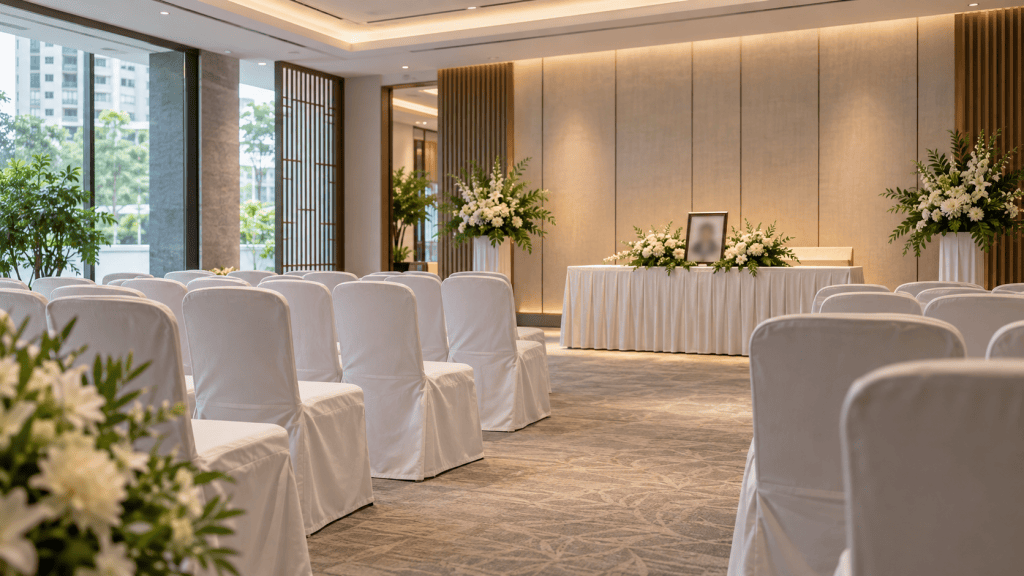
4. Decide on the Wake and Funeral Arrangements
Consider what would best reflect the wishes of the deceased and the needs of your family.
Where should the wake be held? How many days should it last? Would the deceased have preferred cremation or burial? Are there particular traditions, prayers, music, flowers or personal touches the family would like to include?
The wake may be held at a funeral parlour or, where suitable arrangements and approvals are available, at locations such as an HDB void deck or other appropriate venue.
Try not to feel pressured into making the funeral more elaborate than necessary. A meaningful farewell is ultimately about honouring the person and allowing family and friends to say goodbye.
5. Arrange the Burial or Cremation
A Permit to Bury/Cremate is required before proceeding with the relevant arrangements in Singapore.
The next-of-kin can handle the application directly or authorise a funeral director to assist with the necessary arrangements.
For cremation, families will also need to consider what they would like to do with the ashes afterwards. Depending on personal wishes, these may be placed in a columbarium, kept at home, or scattered through permitted sea or inland ash-scattering arrangements.
6. Inform Family, Friends and Important Parties
Once the immediate arrangements are confirmed, inform relatives, friends, colleagues and other people who should know about the passing.
Sharing the wake location, visiting hours and funeral details in one clear message can make communication easier and reduce repeated questions for immediate family members.
It can also help to appoint one family member as the main contact person while another works with the funeral director.
7. Remember the Matters That Come After the Funeral
The funeral may be over, but there will still be administrative matters to settle.
These can include locating the deceased’s will, handling insurance claims, CPF and estate matters, informing financial institutions, settling outstanding bills, managing property and closing accounts or subscriptions.
These tasks don’t necessarily have to be completed immediately. Keep a list and work through them gradually when the family is ready.

Take One Step at a Time
When someone passes away, families often feel they must handle everything at once. They don’t.
Start with what is urgent: certification of the death, obtaining the necessary documentation and contacting an experienced funeral director. The remaining decisions can then be handled one at a time.
Most importantly, remember that a funeral isn’t simply a checklist of arrangements. Behind every document, phone call and decision is someone whose life mattered.
With compassionate professional guidance taking care of the practical details, families can have more space for what truly matters—being together, remembering a life well lived and saying goodbye with dignity.
Singapore Casket: Your One-Stop Solution for Funeral Services in Singapore
Our professional funeral directors have decades of experience and are committed to helping fulfil the last wishes of your loved one and delivering a funeral wake that is memorable, dignified, and heartfelt. We can handle every aspect of your loved one’s funeral arrangement — from embalming and makeup to memorial gemstone services, exhumation and remains relocation, and post-funeral services.
You can learn more about our full range of funeral services at Singapore Casket, or contact us at 6293 4388 — we’re open 24 hours a day, 7 days a week to provide guidance whenever you need it.